
February 15, 2026
&you at Novo Nordisk Obesity Summit

Last week, &you doctors joined more than 260 doctors and health experts from over 10 Southeast Asian countries gathered at Dusit Thani Manila for the 2026 Southeast Asia Obesity Summit. The way the world understands weight is changing fast, and we want your care to reflect the best and newest science. Here is what stood out, in plain language.
Weight is now understood as a chronic health condition, shaped by the brain, hormones, metabolism, genes, and the world around us.
What The Latest Evidence Showed
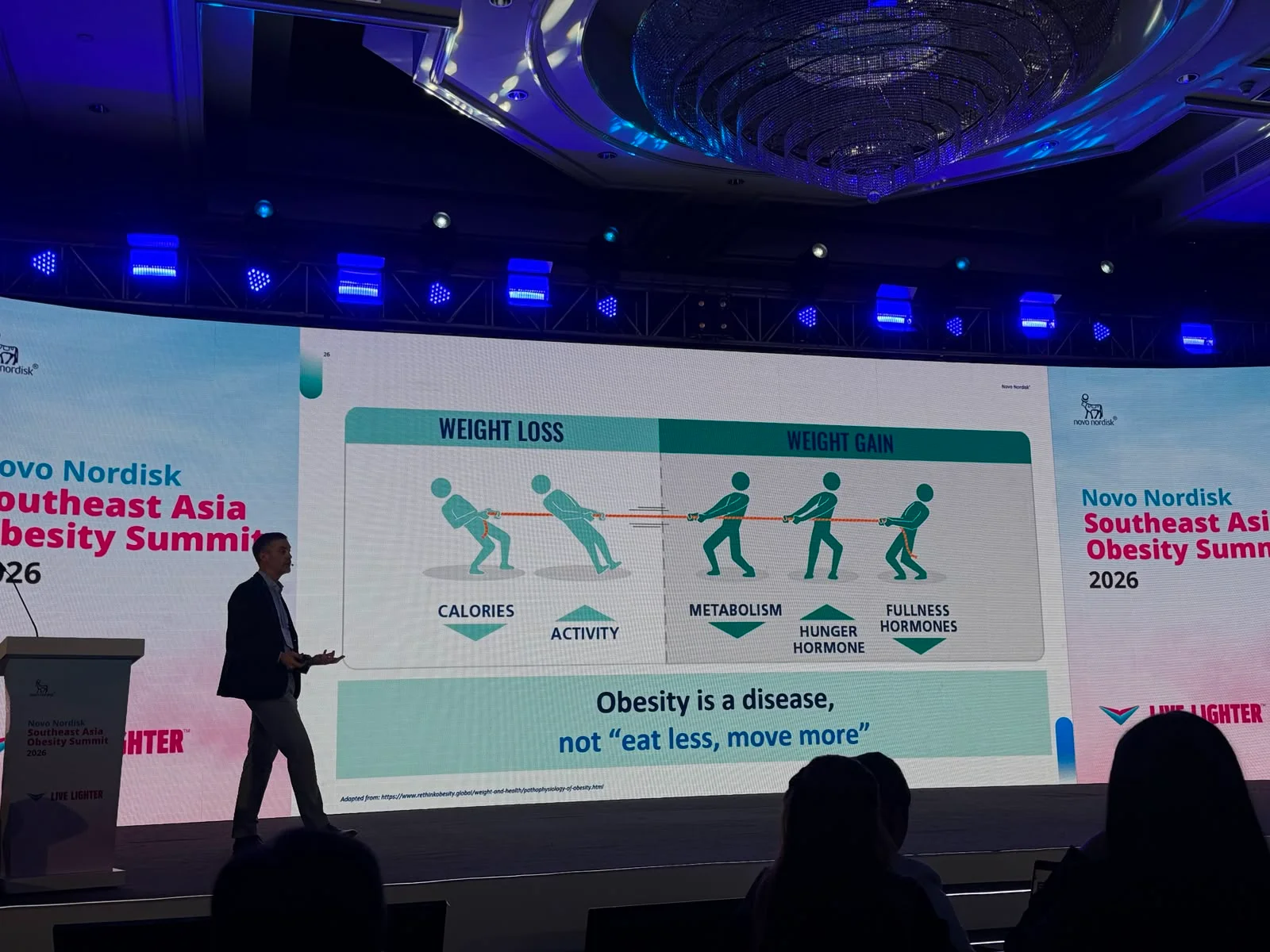
A central theme of the summit was the shift away from treating weight as a simple matter of eating less and moving more. Experts framed weight as a chronic health condition shaped by the brain, hormones, metabolism, genes, and environment, with appetite signals, hunger and fullness pathways, cravings, and persistent thoughts about food (often called food noise) all playing a role.
Asian populations tend to face health risks at a lower weight than Western populations. Care built around Western averages does not always fit Filipinos.
Researchers also shared early data on newer options still under study, including a combination called CagriSema. In one trial, participants without diabetes saw around 23% weight reduction. Experts described the direction of the science as clearer and more personalized each year.
The goal of modern weight care has moved well beyond a number on the scale.
Why This Matters For Filipinos
- Care is about health, not just the scale: protecting the heart, kidneys, and liver, improving metabolism, and preserving strength.
- Newer medicines support whole-body health, not weight alone.
- Asian populations tend to face health risks at a lower weight than Western populations, which calls for region-specific guidance.
- There is no one-size-fits-all plan. Care should be built around the person, their health, and their goals.
- Sustained progress comes from a team-based approach that blends medical guidance, lifestyle support, education, and regular check-ins over time.
For a long time, weight was treated like a simple math problem. The summit made one thing clear. That view is outdated. Weight is now understood as a chronic health condition, one shaped by your brain, your hormones, your metabolism, your genes, and the world around you. Appetite signals, hunger and fullness pathways, food cravings, and even “food noise,” that constant mental chatter about eating, all play a part.
The takeaway is kind, and it is backed by science. Carrying extra weight is not a willpower problem. It is a health condition that deserves real, compassionate care. &you sent its doctors to the summit to hear the evidence firsthand and to bring regional, real-world science back into Filipino care. The takeaway that guides &you remains consistent: weight care should be science-based, personalized, and delivered without judgement, with long-term health as the goal.
This article is for general information and is not medical advice. The medicines and studies mentioned were discussed at the summit and continue to be researched. Talk to a doctor about what is right for you.
For press, media requests, and official statements, please direct all communications to the &you Press Team at press@andyou.ph.